Day of the Dead in Malinalco: Tradition, Memory, and Community
Day of the Dead in Malinalco isn't a big tourist...
Read more


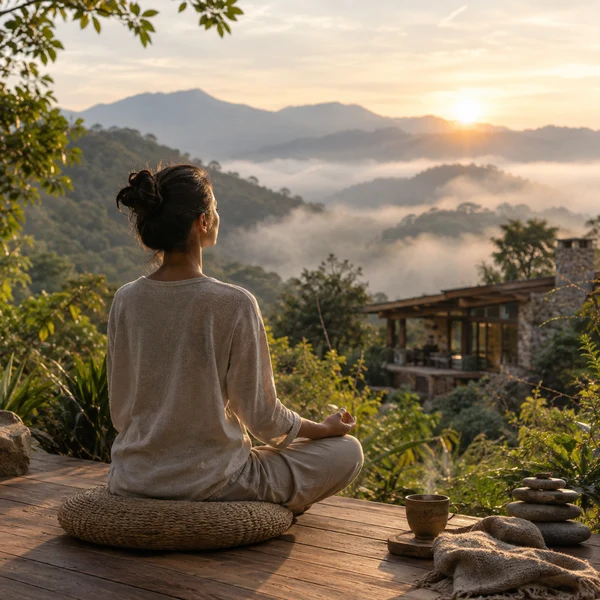
A spiritual retreat for beginners raises the same question for almost everyone: what actually happens during those days? Feeling unsure is totally normal if you’ve never done anything like it, especially if the idea of unplugging your phone, staying quiet, or sharing space with strangers makes you a little nervous. The good news is that no well-run retreat expects you to show up with experience, or with all the answers about your faith or your inner search.
What does help is knowing how a typical day is laid out, which activities are common, what to pack, and what kind of place to pick so your first time feels great instead of overwhelming. In Mexico, more and more people are heading out of the city for a few days to slow down, reconnect with themselves, and often do it with a group led by facilitators or spiritual leaders.
This guide walks you through what to expect before, during, and after your first spiritual retreat.
A spiritual retreat is a stretch of days, usually between one and four, set aside for looking inward, resting your mind, and reconnecting with yourself, far from your regular routine and everyday noise. You don't have to belong to any particular religion or have a meditation or yoga practice already. Some retreats do have a more defined religious focus, like Catholic retreats or ones built around other faith traditions.
For a first timer, the biggest difference from a regular vacation is the purpose. It's not about packing your schedule with sightseeing. It's about making room for quiet, guided reflection, and often group activities that help you work through emotions or rethink personal goals. A well-designed retreat mixes alone time with time together, and never pushes you to share more than you're comfortable with.
Getting prepared ahead of time takes care of a lot of those first nerves. Look over the schedule the organizer sends, ask about the type of lodging, and check whether the retreat includes long stretches of silence, since that completely changes what the experience will feel like.
Not every retreat brings a big aha moment right away, and that doesn't mean it didn't work. For a lot of people, a first retreat is more of a starting point that sparks new questions or habits than an instant change. Knowing that going in saves you the frustration of expecting a dramatic transformation within a few hours.
The first day usually includes a welcome, a rundown of the basic ground rules for living together, and a light first session of meditation or reflection, meant to help the group settle into the rhythm of the place. From the second day on, the activities go deeper, with longer stretches of silence and exercises that invite you to look inward more closely.
Many retreats include blocks of silence, either during meals or at certain times of day, and that's usually what makes first timers the most uncomfortable. According to the Centers for Disease Control and Prevention, taking time to breathe deeply, keep a journal, or practice meditation helps reduce built up stress and process difficult emotions better. That initial discomfort usually fades within hours, and by the second day the silence starts to feel like a break instead of a burden.
Along with time on your own, almost every retreat includes group activities: conversation circles, shared breathing exercises, or outdoor activities that build connection between participants without asking anyone to open up more than they want to. Scientific research on mindfulness, published in Mexican academic journals, points out that practices like these help manage chronic stress and improve overall well-being when kept up over time, even after the retreat is over.
If the idea of doing this surrounded by mountains, fresh air, and real silence sounds good to you, take a look at how the lodging works for groups looking for exactly that at Camper Club Malinalco, just over an hour and a half from Mexico City.
The setting directly affects how good a spiritual retreat turns out. A place surrounded by city noise, constant internet signal, or not much privacy makes it harder to unplug, which is what every beginner is after. That's why it pays to compare your options before booking, looking at both the natural surroundings and the lodging logistics.
| Type of place | Perks for beginners | Things to keep in mind |
|---|---|---|
| Regular city hotel | Easy to get to, with familiar comforts | Noise, distractions, and little connection with nature |
| Makeshift private house | Lower cost | No setup for groups or guided activities |
| A nature destination for groups, like Malinalco | Mountain setting, real silence, and spaces designed for retreats | Book early, since weekends fill up fast |
A place like Camper Club Malinalco shows well what to look for: nine hectares of natural land surrounded by mountains, about ninety minutes from Santa Fe in Mexico City, built to host groups looking for spiritual retreats, religious gatherings, or just a few days of genuine quiet. Spaces like this take the guesswork out, because they already have outdoor areas, a chapel, and lodging zones made specifically for group experiences.
If you're also thinking about adding some light physical activity between reflection sessions, checking out the sports facilities available will help you plan your free time during the retreat.
The town around a destination like this adds to the experience, too. Malinalco is a Pueblo Mágico in the State of Mexico with a pre-Hispanic ceremonial center, a 16th century Augustinian convent, and cobblestone streets that invite you to walk slowly, which fits right in with the purpose of any spiritual retreat.
Before booking, almost every beginner asks the same things about length, cost, company, and how physically demanding it is. Getting answers ahead of time means no surprises, and lets you enjoy the experience without the nerves that come from the unknown.
Most retreats designed for people who've never done one run between one and three days, enough time to notice the benefits of silence and unplugging without feeling shut in for too long. Longer retreats, four days or more, are usually best once you know the format and how much silence or inner work you can handle comfortably.
No, most general spiritual retreats don't require you to belong to a particular religion or share the same belief system. The exception is explicitly religious retreats, like Catholic ones or those of other faiths, where it's smart to look over the program before signing up to see if it includes rituals, Mass, or practices specific to that tradition.
The State of Mexico has several destinations with the mix of nature and nearby access that people living in the capital want, and Malinalco is one of the most popular because of its climate, its mountains, and its spiritual tradition going back to pre-Hispanic times. Being less than two hours from Mexico City means you can plan a retreat over a weekend without taking long vacation time.
No reputable retreat makes you stay if the experience is causing real discomfort, and organizers usually have clear protocols to support anyone who decides to leave before the program ends. Talking it over directly with the facilitator, instead of keeping it to yourself, helps sort things out calmly and keeps it from feeling like a personal failure.
Your first spiritual retreat rarely looks like what you imagined, and that's usually good news. The silence stops feeling awkward by the second day, group activities turn into a safe space instead of forced exposure, and most people who try it once end up wanting to do it again in the months that follow.
Choosing a natural setting with the right setup for groups goes a long way toward that first impression. Checking out the lodging and activity options at Camper Club Malinalco is a great place to start planning a spiritual retreat with the calm and the surroundings a beginner needs.

