Day of the Dead in Malinalco: Tradition, Memory, and Community
Day of the Dead in Malinalco isn't a big tourist...
Read more




Measuring the ROI of an offsite corporate event doesn’t come down to counting attendees or posting nice photos. It comes down to connecting every dollar you spend with a business result you can actually verify. For an HR director, a marketing lead or a CEO, the question that always comes up after an offsite is the same one: what did we really get out of this? An honest answer takes a method, not a gut feeling.
The ROI (return on investment) of a corporate event is calculated by comparing the revenue and benefits it generated against its total cost. With an offsite, though, there are extra variables like transportation, lodging and logistics that have to go into the math too. This article walks you through the formula, the right KPIs for your event’s goal, and how to justify the spend to leadership with solid data, not hunches.
The ROI of a corporate event is the relationship between what the company put in and what it got back, expressed as a percentage or a ratio. The basic formula is simple: ROI equals revenue generated minus event cost, divided by event cost, times one hundred. The result tells you how many dollars came back to the company for every dollar spent on the event.
The tricky part isn't the formula, it's deciding what counts as revenue when the goal of the event isn't to sell anything directly. A product launch can be measured against deals closed in the following ninety days, while a team-building retreat or a strategy workshop is measured against softer indicators, like talent retention, how fast decisions get made, or lower turnover. Both are legitimate ROI, the only thing that changes is what goes into the numerator.
An event held at your corporate offices in Mexico City or anywhere in the State of Mexico is constantly competing with email, urgent meetings and phones sitting on the table. Getting the team out of that environment usually means better focus, more honest participation in the activities, and decisions that would otherwise take weeks to get made. That effect is real, but it's also harder to turn into a number if you don't plan the measurement ahead of time.
The practical advice is to decide, before you leave town, what you'll measure during the event and what you'll measure afterward. Venues built for whole groups, with room to work and room to unwind in the same place, make this easier because they let you clearly separate work blocks from social time, something a generic hotel ballroom rarely gives you.
Before you work out any percentage, it helps to organize your information into three columns: total costs, quantifiable results, and qualitative results you can convert into an approximate value. This process works for a sales launch and for a leadership retreat alike.
Not every corporate event is after the same thing, so the indicators shouldn't be the same either. A product launch needs immediate sales metrics, while a team-building event or a strategy retreat needs organizational behavior metrics that show up over time.
| Stage | What to measure | Suggested tool |
|---|---|---|
| Before the event | Invitation open rates, landing page traffic, early sign-ups | CRM, Google Analytics |
| During the event | Actual attendance, participation in activities, live surveys | Check-in apps, forms |
| After the event | Leads generated, deals closed, workplace climate, retention | CRM, climate surveys, sales follow-up |
The most common mistake is only measuring what's easy to count, like headcount, social media likes or shared photos, and calling that a result. Those numbers describe reach, not return, and presenting them as ROI to a board usually raises more doubts than it builds confidence for the next edition of the event.
The second mistake is not documenting the real costs before the event. When the comparison happens months later, with expenses scattered across different departments, transportation paid by one team and lodging by another, the final figure ends up being a shaky estimate. Pulling the whole budget together in a single document from the start avoids that headache.
If your company is figuring out where to hold its next event outside the office, it's worth checking out venues designed for whole groups, with sports facilities, work areas and lodging all in one place. Check out the sports facilities at Camper Club Malinalco and see if the format fits the goals of your next offsite.
Presenting the ROI of a corporate event to an executive committee works best when the report ties the number back to the business decision that started it all. A return percentage with no context raises doubts, while that same percentage next to the cost of not acting, like turnover avoided, sales sped up or decision time cut, is far more convincing.
It's smart to put together a short report with three sections: the original goal of the event, the ROI calculation with the method explained in one line, and a concrete recommendation for the next edition. Leadership rarely needs every line item. They need to know whether to repeat the format or tweak it.
The outcome of a corporate event is largely decided before the team ever gets on the bus or the plane. The venue, the logistics and the way the program is designed directly shape the quality of participation, and that participation is what turns into measurable results later.
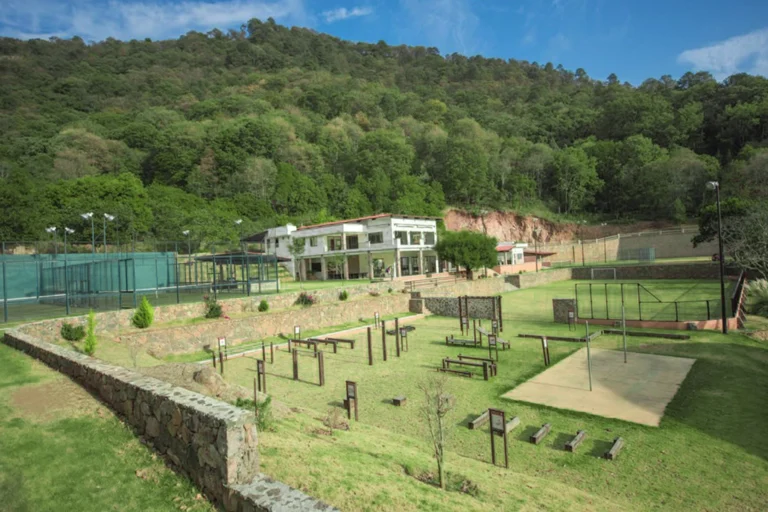
Places like Camper Club Malinalco, located in the Pueblo Mágico of Malinalco about 90 minutes from Santa Fe in Mexico City, offer 9 hectares (about 22 acres) where you can combine work sessions, outdoor activities and lodging for the whole group in one spot. That cuts the downtime and travel that normally eat into productive hours on an event agenda. Having green areas, a clubhouse and enough space to separate activities of different sizes also makes measurement simpler, because the organizing team can clearly document which activity led to which result.
Checking out the kind of space available ahead of time, through options like the Camper Club Malinalco clubhouse, helps you build an agenda where every work block has the right setting, which later makes it easier to tie results to specific activities.
The basic formula is revenue generated minus total event cost, divided by total event cost, times one hundred. The result is a percentage that shows how many dollars came back for every dollar invested. For events without a direct sales goal, swap revenue for an estimated value of the indirect benefits, like employee retention or shorter project timelines.
When the goal is team-building or leadership development, it makes sense to track organizational behavior indicators, like workplace climate, employee turnover in the following months, how fast decisions get made, or participation in internal surveys. You can convert these into an approximate dollar value using what the company already pays for those problems.
The cost depends on the number of people, how long the event runs, and what the venue includes, like transportation, lodging, food and activities. Venues close to Mexico City and the State of Mexico, with lodging and work areas in the same place, tend to bring the total cost down by cutting extra trips between the hotel and the work sessions.
The best approach is to measure each event on its own and also keep a running comparison across editions. That record helps you see which formats, venues or lengths deliver better results over time, and it keeps you from judging each event in a vacuum.
Measuring the ROI of an offsite corporate event takes organization from the planning stage, a clear formula, and KPIs chosen for the real goal of the gathering, not for whatever happens to be easy to count. When you repeat that process with every edition, the company stops guessing whether it's worth leaving the office and starts deciding with data.
If your next step is picking a venue for an event where measurement is part of the design from day one, talk with the team about how to structure an offsite that's built to show results too.
Schedule a visit to Camper Club Malinalco