Vacation Rental Near Mexico City for a Stress-Free Long Weekend
A vacation rental near Mexico City is the most practical...
Read more →



You don’t pick a school camp company by the flashiest brochure or the lowest price.
You pick it by how it handles things when the plan goes sideways. A student with a fever at midnight, a rainstorm that cancels the main activity, or a bus that shows up late will test any operator, and for a school in Mexico that test has real consequences, because dozens or even hundreds of families trust one company to look after their kids for several days.
The good news is that the decision can be organized. With ten clear criteria, a table to compare quotes, and a few uncomfortable questions, a school in the State of Mexico or Mexico City can quickly tell who is winging it and who runs a real system. Choosing well also saves your teachers time, since they stop putting out fires and get to focus on the learning. This guide walks through every step, from permits and safety to contracts and follow-up, with examples of what each sign looks like in real life.
A school camp company designs and runs the entire stay for a group away from school: coordinated transportation, lodging, meals, activities, supervising staff, and emergency care. What sets it apart from a day trip or a tourist getaway is that the program is built around learning and bonding goals, not just entertainment.
Some companies own or manage the place where the camp happens, and others act as middlemen who hire out facilities, guides, and transportation to third parties. Neither option is bad by default, but who is responsible changes. With a direct operator, you have one point of contact to handle any incident, while with a middleman you should get in writing who is responsible for each part of the service.
A useful proposal spells out nights of lodging, meals, transportation, activities for each day, assigned staff, insurance, equipment, and medical care. When any of these is missing, the school ends up finding the gap in the middle of the camp, which is the worst time to negotiate.
These criteria are ordered from what weighs most in a decision to what helps you fine-tune it. None of them works alone, but together they paint a clear picture of each candidate.
In Mexico, tourism service providers that run camps have to follow NOM-06-TUR-2017, which sets minimum requirements for operations, information, hygiene, safety, facilities, and equipment, and which took effect in June 2018. If the program includes ziplining, rappelling, or other risky activities, NOM-011-TUR-2001 for adventure tourism applies too. Asking for copies of the paperwork, the liability insurance, and the internal rules takes one afternoon and saves you from nasty surprises.
Running a camp for vacationing families is very different from managing a group of middle schoolers with three teachers in charge. Ask how many schools the company served last year, what ages they were, and how long the stays lasted. Several years of working with school groups usually shows up as smooth processes, like quick check-ins, realistic rest routines, and activities adjusted by age.
The staff shapes the experience more than the facilities do. Ask who leads the program, what training the guides have, and whether they're certified in first aid. The ratio of adults to students should be written into the quote, because it's a number that lets you compare very different proposals on equal terms.
A serious company explains without hesitation what it does when someone gets hurt, has an anxiety attack, or when the weather turns extreme, or when a student doesn't show up in the headcount. Asking for the protocol in writing, the route to the nearest hospital, and the name of the person running the infirmary gives you a clear idea of how prepared they are. As an international benchmark, the American Camp Association builds its accreditation standards around health, safety, and risk management, three areas you should expect from any professional operator.
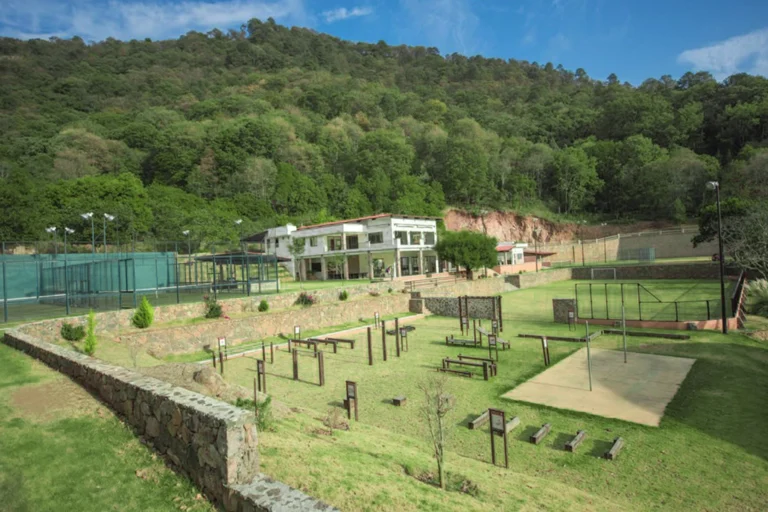
The place matters as much as the program. Check the dorms, bathrooms, dining hall, sports areas, pool, and activity zones, plus how far it is from your school. For example, Camper Club Malinalco sits on 9 hectares (about 22 acres) in Malinalco, State of Mexico, roughly 90 minutes from Santa Fe, and can lodge more than 250 people, a size that lets several groups from the same school stay together without getting split up. You can find the details of the space on their school camps page.
If you'd like to see how a program that brings lodging, meals, and activities together in one place is put together, check out the Camper Club Malinalco website.
A good school camp has a teaching purpose behind it, like teamwork, leadership, environmental education, independence, or bringing a new group together. Asking for the program by day, with schedules, goals, and rainy-day backup activities, shows whether there's real design behind it or just a list of games. Teachers should be able to adapt it to their group and to what they're already working on in class.
Food is a sensitive topic with big groups. Ask about the menu for each day, how allergies and intolerances are handled, the vegetarian options, and how the food is stored and served. A health form for each student, handed in ahead of time, lets the company plan menus and care before the group even arrives.
The company should assign one coordinator who is the school's direct contact before, during, and after the stay. During camp, families love having a channel with photos and quick updates, and the school needs an on-call phone number that's always answered. When communication is organized from the quote onward, it usually stays that way in the field.
A clear quote spells out what the per-student rate includes: nights, meals, transportation, activities, insurance, equipment, and free spots for teachers. It also sets the cancellation policy, what happens if the number of students changes, and the terms for bad weather. Anything that isn't in writing tends to turn into an extra charge or a last-minute argument.
Talking with the coordinator at another school that already traveled with the company gives you information no sales pitch will. Ask what went well, what went wrong, and how it got fixed, because how a company solves a problem says more than a record with no problems at all. Asking for two or three references from the last few school years is a perfectly reasonable request.
A simple table keeps you from deciding on gut feeling or on who gave the best presentation. With the same rows for every candidate, the committee compares proposals on equal terms and has a record of why it picked one over another.
| Criteria | What to ask for in writing | Red flag |
|---|---|---|
| Standards and permits | Current paperwork and liability insurance | Vague answers or “we'll send it to you later” |
| Staff | Adult-to-student ratio and first aid training | They can't say who's with each group |
| Emergencies | Protocol, infirmary, and route to the nearest hospital | They claim “nothing has ever happened” |
| Facilities | A site visit or a full walkthrough of the place | They only show catalog photos |
| Program | Day-by-day schedule with a rainy-day backup | A list of activities with no goals |
| Food | Menus and how allergies and intolerances are handled | Generic menu with no care for special diets |
| Price | Breakdown of what's included and what's not | One flat rate with no details |
| References | Contact info for schools that already traveled with them | They don't have any or avoid sharing them |
A private school in Naucalpan, State of Mexico, wants to take 120 middle school students on a two-night stay. The committee asks three companies for a quote using the same brief. The first has the lowest price, but it doesn't define the adult ratio or share a medical protocol. The second has its paperwork in order, but the place is more than four hours from the school. The third delivers a day-by-day schedule, a rainy-day backup plan, a price breakdown, and a site visit before booking.
The committee picks the third one even though its rate is somewhere in the middle, because every critical point was settled in writing. This scenario is just an illustration, but it reflects the kind of decisions a school can document with the table above.
When a place has spaces like the sports and adventure facilities and the clubhouse at Camper Club Malinalco, a site visit lets you check in person where the activities will happen and which covered areas are available as a rainy-day backup. It also shows you whether the dorms and bathrooms are the right size for your group.
The cost changes depending on the number of nights, how many students are going, transportation, adventure activities, and the time of year. That's why quotes are almost always given per student, and what matters is confirming what that rate includes: lodging, meals, insurance, equipment, and free spots for teachers. Comparing prices without comparing what you get leads to bad decisions, so ask every company for a breakdown.
It's best to start looking four to six months ahead, so you have time to request proposals, visit facilities, and gather permission slips from families. Peak dates, like the end of the school year, fill up first, so a school with a fixed calendar should book early.
At the very least, ask for current liability insurance, the internal rules, the emergency protocol, and proof of compliance with NOM-06-TUR-2017. If there are adventure activities, add what's required under NOM-011-TUR-2001. It's also fair to ask for first aid training certificates for the staff who'll be with the students.
For stays of one to three days, a distance of an hour and a half to two hours lets you travel without the ride eating up the program or wearing the students out. Destinations in the State of Mexico like Malinalco fall in that range, since Camper Club Malinalco is about 90 minutes from Santa Fe. Being close also makes it easier for families to get there quickly in case of any emergency.
The outcome of a school camp is decided at the decision table, long before the first bus leaves campus. The right company brings together proper paperwork, prepared staff, the right facilities, and communication that doesn't fall apart when something unexpected comes up. With the comparison table and the steps above, the committee has a method it can repeat every school year and improve with each new generation's experience.
For schools in central Mexico, a place 90 minutes from Santa Fe with room for more than 250 people, like Camper Club Malinalco, gives you a concrete starting point for comparison. The team can answer questions about dates, groups, and programs through their contact page.