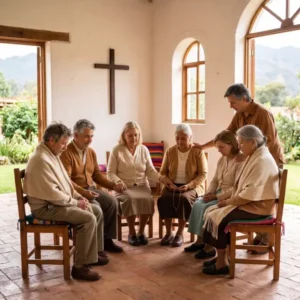
Religious Retreats for Seniors: Faith, Calm and Community in
Organizing religious retreats for seniors usually starts with a very...
Read more →




Picking catering for a large corporate event is nothing like ordering lunch for a ten-person meeting. With 150, 300 or 500 guests, a twenty-minute delay in service, a badly planned line or a dish that can’t handle the heat can ruin the experience for your whole team, and the final bill easily runs into the hundreds of thousands of pesos.
The decision gets a lot easier when you weigh seven concrete criteria: real production capacity, service style, menu and dietary restrictions, hygiene, staffing, a transparent quote, and logistics at the venue. In Mexico, a standard lunch or dinner menu usually runs between $80 and $240 pesos per person based on market references, but the final price depends on what each proposal actually includes. Here's how to compare vendors, what to ask before you sign, and how to avoid the most common mistakes when planning food for a big company event.
Going from 40 to 200 guests doesn't mean multiplying the recipe by five. The kitchen changes, the staff changes, the equipment to keep food hot and cold changes, setup times change, and even the way people move around the room changes. A vendor who's great for small meetings can fall short at high volume, and a caterer used to weddings doesn't always get the pace of a corporate agenda with talks, breaks and room changes.
Cooking for 300 people takes kitchens with enough capacity, plenty of ovens and warming trays, and a team that knows how to time every dish coming out. That's why you should ask what the biggest event the vendor handled in the past year was, and whether it was at a venue like yours. The answer tells you more than any brochure.
On a corporate agenda, a meal is a break inside a program. If service takes 50 minutes instead of 30, the afternoon session starts late and the session sponsor loses their audience. A good vendor offers simultaneous stations, service routes and a maximum wait time, not just a list of dishes.
Not every format works for every kind of event. The table below sums up the most common ones in Mexico, along with the per-person price ranges published by Cronoshare México. These are national estimates and can vary by city, season and ingredient quality.
| Format | Best for | Range per person (MXN) | Main risk |
|---|---|---|---|
| Coffee break | Meetings, conferences and 20 to 30 minute breaks | $60 to $125 | Runs out fast without constant refills |
| Cocktail reception | Launches, networking and welcome events | $100 to $150 | Falls short if the event runs over two hours |
| Brunch | Morning events and one-day conventions | $120 to $140 | Needs a large, well-laid-out setup |
| Standard menu (lunch or dinner) | Closing lunches and year-end dinners | $80 to $240 | Price swings a lot depending on ingredients and service |
| Fine dining | Galas and executive dinners | $300 to $1,500 | High budget and complex production |
A buffet is the most affordable and flexible format for big groups, but it needs several serving lines so the queue doesn't turn into a bottleneck. It works well for convention lunches where attendees have 45 to 60 minutes free.
Food stations spread demand across several points, like tacos, pasta and salads, and they get teams talking to each other. They're a great pick when you want a more lively vibe than a traditional dining room.
Plated service feels formal, but it takes more servers and a very well-coordinated kitchen. With more than 200 guests, it usually makes sense to save it for a gala dinner and go with a buffet or stations the rest of the program.
Get in writing the maximum number of guests the vendor can serve with their own kitchen and staff. A common industry rule of thumb is one server for every 20 to 25 guests for plated service, though it changes by format. If the quote doesn't mention staff, key information is missing.
Ask for company references, photos of similar setups and, if you can, talk to a recent client. A caterer with a solid corporate track record knows things like invoicing, tight schedules and how to seat guests by table or area.
According to Mexico's Health Department, around 40% of the population in Mexico has some kind of allergic condition, so at a 300-person event you can pretty much count on guests with restrictions. Your caterer should offer vegetarian, gluten-free and lactose-free options, plus a protocol to prevent cross-contamination and label common allergens like peanuts, shellfish, milk and eggs. Ideally, collect these restrictions at registration and hand them to the vendor well ahead of time.
NOM-251-SSA1-2009 sets the minimum good hygiene practices for handling food and beverages in Mexico. Ask how the vendor trains their staff, how they control temperatures and whether they operate under that standard. Health authorities in the State of Mexico also publish a guide to hygiene practices for food vendors that can help you come up with good questions.
Confirm who brings the furniture, dishware, linens, coffee stations and cleanup crew. Also ask about setup times, power and water needs, and the support kitchen space the team requires.
Two proposals with different prices may not be comparable. Require each one to break down the menu, portions, drinks, staff, equipment, transportation, tax and overtime charges, so you're comparing apples to apples.
A tasting with the exact dishes that will be served avoids surprises on the day. Ask for a backup plan too, in case of rain, transportation delays or last-minute headcount increases.
Hygiene at high volume: the WHO's five keys to safer food make a great conversation starter: keep things clean, separate raw and cooked food, cook thoroughly, keep food at safe temperatures, and use safe water and raw ingredients. At high volume, keeping dishes below 41 °F (5 °C) or above 140 °F (60 °C) prevents most problems.
If your event is outside the city, look at venues that bring lodging, event rooms and a restaurant together in one place, like the Clubhouse at Camper Club Malinalco, to keep food logistics simple.
Corporate catering also needs a different strategy once you leave the city. More and more companies in Mexico City and the State of Mexico are taking their events to nearby destinations to get their teams out of the routine. Malinalco, for example, is about 90 minutes from Santa Fe, a distance that makes you think about the cold chain, delivery times and kitchen space from day one of planning.
When food is prepared in the city and driven in, the risk is temperature during the trip. When it's cooked at the venue, the risk shifts to kitchen capacity and ingredient supply. Neither option is better on its own, but you need to decide before you lock in the menu.
One venue that makes this easier is Camper Club Malinalco, a private hotel on 9 hectares (about 22 acres) with lodging for more than 250 people, event rooms, outdoor areas and a restaurant, where the team helps with choosing services and running things during your stay. Having food, spaces and activities on the same property, including the sports facilities for team-building activities after lunch, cuts down the number of vendors you have to coordinate.
To get a sense of the spend, this sample calculation uses Cronoshare's reference ranges for a one-day event with 220 attendees: a welcome coffee break, a three-course lunch (range of $160 to $300 per person) and an afternoon coffee break. It's not a quote, just an exercise to get a ballpark figure.
| Service | Per person (MXN) | Minimum total | Maximum total |
|---|---|---|---|
| Welcome coffee break | $60 to $125 | $13,200 | $27,500 |
| Three-course lunch | $160 to $300 | $35,200 | $66,000 |
| Afternoon coffee break | $60 to $125 | $13,200 | $27,500 |
| Estimated total | $61,600 | $121,000 |
On top of that number, you'll need to add servers, dishware, alcoholic drinks if you're serving them, setup, transportation and tax.
Tip: keep a 5% to 10% cushion over your confirmed headcount, because big events almost always see last-minute changes.
It depends on the format. According to Cronoshare México, a coffee break runs $60 to $125 per person and a standard lunch or dinner menu runs $80 to $240, while fine dining can top $300. The final price changes with the city, guest count, staffing and ingredients, so the best move is to compare at least three detailed quotes.
For events with more than 100 people, start looking two to three months ahead, especially in busy seasons like year-end dinners. That gives you time to request quotes, do a tasting and lock in the menu without pressure. The best-reviewed vendors tend to fill their calendars months in advance.
For 300 people, a buffet or food stations are usually more practical because they take less staff and speed up service. Plated service is best saved for gala dinners or presentations where formality is part of the message. A mix of both, stations during the day and a plated dinner at night, balances cost and experience.
Yes, as long as you confirm with the venue whether it has its own kitchen or allows outside vendors. Malinalco is about 90 minutes from Santa Fe, so you'll need to plan the cold chain and the team's arrival times. Some venues, like Camper Club Malinalco, offer a restaurant and help with event planning, which keeps coordination simple.
The corporate catering people remember fondly almost never has the fanciest menu. It's the one that showed up on time, respected guests' dietary restrictions and kept the agenda on track.
Choosing it calmly means comparing complete quotes, tasting the menu, checking the venue logistics and leaving room for the unexpected.
For events planned outside the city, with lodging, event rooms, a restaurant and outdoor areas all in one place, Camper Club Malinalco can help you plan from picking services to running the event. Reach out to the team to go over dates, guest count and the food format that works best for your company.
Contact us
