Vacation Rental Near Mexico City for a Stress-Free Long Weekend
A vacation rental near Mexico City is the most practical...
Read more →




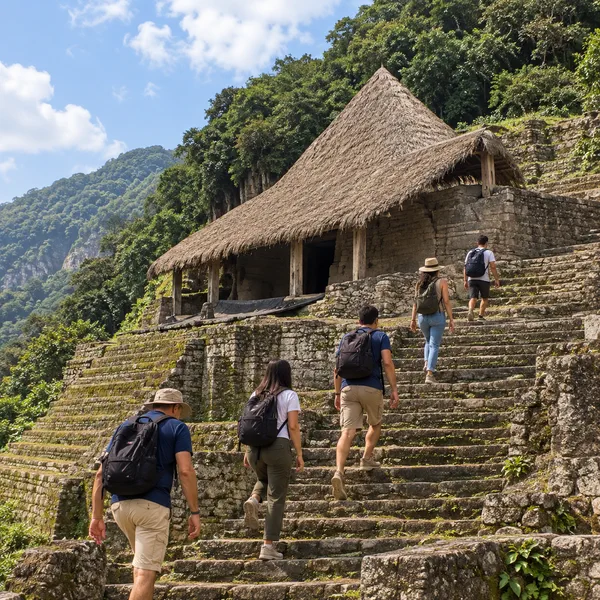
Cerro de los Ídolos in Malinalco is where the Mexica carved a temple to the Sun straight out of living rock, and you reach it by climbing 426 steps from the edge of town. It’s open Tuesday through Sunday, 10:00 a.m. to 5:00 p.m., and admission is 85 pesos for Mexican nationals and 155 pesos for foreign visitors, based on the 2026 INAH rates.
People planning a getaway to the State of Mexico usually have two questions: is the climb really worth the effort, and how much time should they set aside? The short answer is yes, it's worth it, and two to three hours is usually enough to see the Cuauhcalli, the buildings at the top, and the overlook above town.
Below, we cover what happened on this mountain, what you'll see at each structure, the current practical details, and how to tailor the visit for a family, a school group, or a work team coming from Mexico City.
Cerro de los Ídolos is the mountain that overlooks Malinalco from the west, in the State of Mexico. The archaeological complex known as Cuauhtinchan sits on its slope and summit, a name the INAH uses alongside Malinalco Archaeological Zone. The entrance is on Calle Amajac s/n, in the Santa Mónica neighborhood, a short walk from the town center.
What sets Cerro de los Ídolos apart from other pre-Hispanic sites in Mexico is that its main buildings weren't made from stacked blocks. They were carved directly into the rock of the mountain. That's why it's described as a monolithic construction, which is rare even for Mesoamerica. The summit sits at about 2,125 meters (roughly 6,970 feet) above sea level and holds six monumental structures, according to the INAH page on the Malinalco Introductory Hall, from which the different areas of the site were overseen.
People lived in this region long before the armies of Tenochtitlan arrived. The INAH places Malinalco within the territory of the Matlatzinca and Ocuiltec peoples, farming communities in the south of the State of Mexico. Remains of an earlier ceremonial center, which has never been excavated, have been identified at the top of the hill, which suggests the mountain was already sacred before the Mexica conquest.
Around the 1470s the Mexica took control of the area. They liked to set up military outposts to secure tribute and obedience in the neighboring valleys. Malinalco served that purpose with a twist: besides keeping watch, it became a sanctuary for the warrior elite, the eagle and jaguar knights.
The ruins you can visit today date from the late 1400s and early 1500s, during the reigns of Ahuízotl and Moctezuma Xocoyotzin. According to the INAH, construction of the Cuauhcalli began in the year 9 calli, which is 1501. The historical overview from México Desconocido agrees that this was a settlement built for religion and the empire's military training.
When the Spanish arrived, Malinalco shows up in the letters of Hernán Cortés. According to accounts gathered in popular history writing, one expedition failed in its attempt to defeat the Malinalcas, who had taken refuge on the hill, which was too steep for cavalry. Centuries later, on March 23, 1936, archaeologist José García Payón began the first formal excavations, and the site has since become one of the most visited archaeological zones in the State of Mexico.
This is the star of the complex and the reason many people make the climb. It's carved into the rock, and the remains of two ocelots can still be made out on either side of its staircase. The doorway represents the open jaws of a serpent, with its tongue stretched out like a doormat, so anyone who walks in symbolically enters through the animal's mouth.
Inside, you can still see sculptures of eagles and an ocelot. The chamber is thought to have been used for military preparation rites for those who would become eagle and jaguar warriors, although its exact purpose is still being studied.
The INAH catalog lists Structure III as the Tzinacalli, described as the house of the burners. Another building, made up of two levels with a staircase facing west, is probably linked to the god Tláloc. Walking through these structures slowly helps you see that the site wasn't a single, isolated temple, but a ceremonial complex with several functions.
From the platform at the top, you get a clear view of the layout of colonial Malinalco, with its Augustinian convent and tidy streets set among the greenery. It's the perfect spot to stop, drink some water, and take in the valley before heading down. For anyone traveling with students, this moment works like an outdoor history class, with the landscape as the chalkboard.
Before or after the climb, stop by the Introductory Hall. Entry is included in your ticket to the archaeological zone, and it sums up the historical development and ceremonial purpose of the site. In downtown Malinalco, the Museo Universitario Dr. Luis Mario Schneider holds the statue of the god Ehécatl, found right here at Cerro de los Ídolos, along with a botanical garden.
The INAH keeps improving the visit. Renovation and rehabilitation work took place in the zone between March 23 and May 8, 2026, and in September of that year a new walkway was announced, as described in INAH bulletin 405. Signs along the staircase explain the history of the place in Spanish, English, and Nahuatl.
Here are the practical details to have on hand before you leave Mexico City or anywhere else in the State of Mexico.
| Detail | Info |
|---|---|
| Location | Calle Amajac s/n, Santa Mónica neighborhood, Malinalco, State of Mexico |
| Hours | Tuesday through Sunday, 10:00 a.m. to 5:00 p.m. |
| Cost, Mexican nationals | 85 Mexican pesos |
| Cost, foreign visitors | 155 Mexican pesos |
| Free admission | Mexican seniors. The INAH has also mentioned free entry for Mexican nationals on Sundays, so it's best to confirm before you go |
| The climb | 426 steps and about 125 meters (410 feet) of elevation gain |
| Restrictions | No smoking, no food, and no pets |
| Included | Access to the zone's Introductory Hall |
Malinalco is about 99 kilometers (around 61 miles) from the capital, so it works well for a day trip or a weekend. Here's the most common route:
If you're traveling with a group and want lodging, meals, and activities all in one place, check out Camper Club Malinalco, a private venue for groups about 90 minutes from Santa Fe.
You don't need to be an athlete to make the climb, but a little preparation helps. This list covers what works best in practice:
This is a sample plan for a group of 20 to 40 people, whether that's a school trip, a work team, or a big family. Timing is approximate and can be adjusted based on the age of your group.
| Time | Activity | Note |
|---|---|---|
| 9:00 a.m. | Arrive in Malinalco and have a light breakfast | Don't climb on an empty stomach |
| 10:00 a.m. | Enter the archaeological zone and start the climb | Take a short break at each landing |
| 11:00 a.m. | Cuauhcalli, structures at the top, and overlook | Time for photos and a quick explanation |
| 12:30 p.m. | Head down and visit the Introductory Hall | Enjoy the shade inside |
| 2:00 p.m. | Lunch in town | Trout, cecina tacos, or local broth |
| 4:00 p.m. | Schneider Museum or free time | A relaxed finish before the trip home |
For school groups, a plan like this can become a hands-on Mexican history lesson: observing, sketching reliefs, and keeping a log of what each student took away. People who run school camps in the region often make the hill visit the main activity of day two, when the group is rested and settled into the surroundings.
Malinalco has hotels and inns of all sizes, but the challenge changes once your group goes past 30 or 40 people. At that point you want a place with beds, meeting rooms, a dining hall, and open areas all on the same property, so you don't have to split the group up across several spots.
Camper Club Malinalco is one example of that kind of venue: it covers 9 hectares (about 22 acres) next to the Malinalco Golf Club, sleeps more than 250 people, and has meeting rooms, a chapel, a restaurant, a pool, and sports areas. Its clubhouse and sports and adventure facilities let you combine a visit to Cerro de los Ídolos with team-building activities, workshops, or downtime, while the vacation rental for groups works well for extended families and private gatherings.
Being close to town also means a spiritual retreat, a religious gathering, or a corporate event can include a morning hike up to the Mexica sanctuary as a time for reflection or team bonding.
The climb to the archaeological zone has 426 steps and about 125 meters (410 feet) of elevation gain. It's not a technical trail, but it does take a steady pace and breaks. People with limited mobility or heart conditions should think about whether doing the full climb is right for them.
The zone is open Tuesday through Sunday, 10:00 a.m. to 5:00 p.m. In 2026, admission is 85 pesos for Mexican nationals and 155 pesos for foreign visitors, according to the INAH. Mexican seniors get in free. It's best to confirm rates and hours through official channels before your trip.
Malinalco is about 99 kilometers (61 miles) from Mexico City. By car from Santa Fe it's around 90 minutes without traffic, and by bus there's Flecha Roja service from the Terminal Poniente, at Observatorio. Once you're in town, you walk to the archaeological zone along Calle Amajac.
Yes, and it's one of the top-recommended outings in the State of Mexico for students. Keep an eye on the pace of the climb, bring water, and remember that food and pets aren't allowed in. For big groups, it helps to split into teams with one leader for each.
Climbing Cerro de los Ídolos takes just a few hours and gives you a clear sense of why this mountain mattered so much to the Mexica and to the people who came after them. Seeing the Cuauhcalli, looking out over the valley from the top, and walking through town on the way down turns a weekend getaway into an experience with real historical meaning.
If you're traveling with a large group, you can handle all the logistics from one place. The Camper Club Malinalco team helps plan stays, meals, and activities for schools, companies, retreats, and families. Just reach out and tell us about your group, your dates, and how many people are coming, and we'll send you a custom proposal.
Request your proposal
