Hill of the Idols Malinalco: History and How to Visit
The Hill of the Idols in Malinalco is where the...
Read more


A good school camp itinerary balances educational activities, downtime, group bonding, healthy meals and clear safety protocols, all laid out in realistic time blocks that fit the age of the students.
When a school plans a trip like this, the same question always comes up in the teachers’ lounge: how much do we pack into the day, and how much do we leave open? The answer doesn’t depend on how excited the planning team is, it depends on planning that ties learning goals to what the venue can actually do.
A poorly built itinerary can turn a great experience into an exhausting few days, while a well thought out one stays with students for years.
A school camp itinerary is the document that lays out, hour by hour, everything that will happen during the stay, from the moment the bus pulls in to the last activity before heading home. It sounds simple, but a good itinerary does several jobs at once. It's an operations guide for counselors, a communication tool for parents and the backbone of the whole trip's learning plan.
Coordinators who have run school trips for years agree on one thing: you don't write an itinerary just to fill hours, you write it around the group's energy curve. The first stretch is for breaking the ice, the middle of the day is for the activities that take the most physical or mental effort, and the evenings are saved for wind-down activities that strengthen friendships.
Any quality school camp itinerary, whether it lasts two days or a full week, needs to cover the following pieces. Each one plays a different role in the experience, and leaving one out is the most common reason a camp feels disorganized.
Camp stops being just recreation when activities have a clear learning purpose. Applied ecology workshops, leadership exercises, team problem-solving challenges or flora and fauna walks connect with what students see in the classroom, but through hands-on experience that sticks in their memory much longer.
A common mistake is overpacking the schedule, thinking more activities means a better experience. Kids and teens actually do better when the itinerary has real rest blocks, not just five-minute breaks. Meals need set times and portions that fit the group's age, since constant physical activity burns a lot of energy.
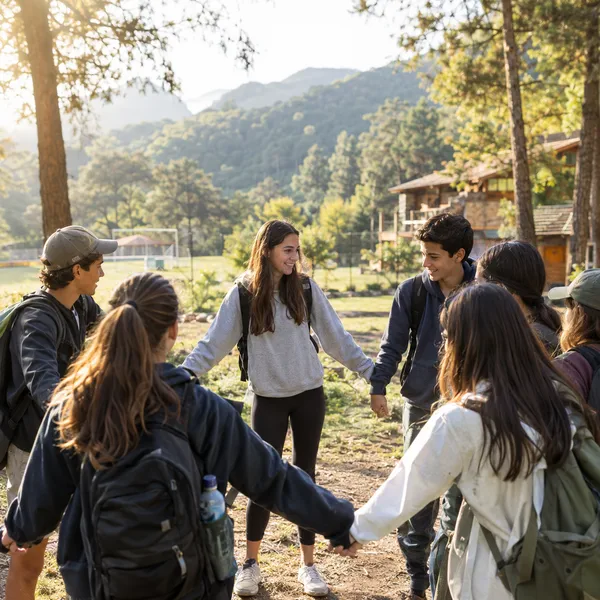
Campfires, theme nights, icebreaker games and small group challenges are what students remember most fondly later on. They shouldn't be improvised the same night, it's best to plan them ahead so there's enough gear, space and staff to pull them off smoothly.
No itinerary is complete without spelling out, activity by activity, how many counselors are in charge, what safety measures apply in each area and what the plan is for a medical or weather emergency. Parents don't always see this in their copy of the itinerary, but it should be in the internal operations document the school shares with the camp venue.
Research on outdoor education points the same way: this kind of learning benefits both students and teachers, strengthens personal and social growth in the group and helps what they learn stick around longer, as Spain's Ministry of Education explains in its blog post on outdoor learning. That's why these activities belong at the center of the itinerary, not as filler between meals.
On the safety side, international camp organizations like the American Camp Association agree that a program should be designed to protect the health and well-being of participants in every activity, a standard that works just as well for a camp in Mexico as anywhere else in the world.
Breaking the itinerary into clear time blocks makes it easy for counselors and teachers to know exactly what's next. Here's an example of how a three-day school camp in Mexico could look:
| Time block | Day 1 | Day 2 | Day 3 |
|---|---|---|---|
| 7:00 - 8:30 | Arrival and settling in | Breakfast and morning warm-up | Breakfast and packing |
| 8:30 - 10:30 | Icebreaker activities | Ecology or leadership workshop | Group sports activity |
| 10:30 - 13:00 | Facility tour | Exploration route or hike | Wrap-up and group review |
| 13:00 - 14:30 | Lunch | Lunch | Lunch and farewell |
| 14:30 - 17:00 | Sports activities | Rotating workshops | Heading back to school |
| 17:00 - 19:00 | Free time and cleanup | Free time and cleanup | Back home |
| 19:00 - 21:30 | Dinner and welcome campfire | Dinner and theme night | Back home |
This table is just a general guide. Every school adjusts the timing based on the group's age, the time of year and the weather where the venue is located.
The venue where the camp takes place has a direct effect on how realistic and varied your itinerary can be. A place with sports facilities, big natural areas and space for workshops lets you build a mix of activity blocks without extra travel eating up valuable time. At Camper Club Malinalco, for example, the nine hectares of land make it possible to combine sports, outdoor workshops and group bonding in a single day without the group ever leaving the property, which makes logistics a lot easier when you're managing a big group of students.
Having your own sports facilities on site also opens up more options in the itinerary, since you can alternate high-energy activities with calmer workshops without losing time on transportation between places.
Many schools in Mexico City and the State of Mexico look for venues that are a reasonable drive away so they don't lose a whole day just getting there. A location 90 minutes from Santa Fe, like Camper Club Malinalco, means the group shows up with enough energy to start activities in the first afternoon block, instead of arriving wiped out after hours on the road.
If your school is getting ready to pick the best place for its next trip, it's worth checking how varied the facilities are and whether they let you cover every block of the itinerary without repeating activities day after day. You can look into that directly at camperclub.mx.
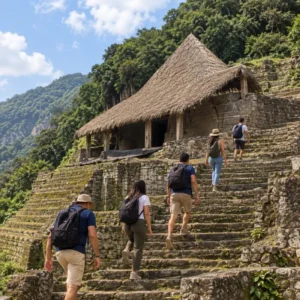
For a three-day camp with a group of middle schoolers, the teaching team set leadership and conflict resolution as their main goals. Day one was all about icebreakers and a guided tour of the grounds, including the sports areas where the first group challenges took place. Day two had educational workshops in the morning and physical activities in the afternoon, helped by the fact that the weather in the region, in the Magical Town of Malinalco in the State of Mexico, stays mild most of the year. Later that afternoon, as a bonus activity, the group visited the nearby Malinalco archaeological site, protected by Mexico's National Institute of Anthropology and History, which added a cultural piece to the itinerary without losing sight of the trip's learning goals. Day three was saved for a short group review, where each team shared what they learned during the stay before heading back to school.
This kind of structure, with clear goals from day one and a logical progression of activities, is exactly what sets a well-planned itinerary apart from one made up on the fly.
Once camp is over, take a look at whether the itinerary delivered on what you set out to do. Asking the teachers who came along which activities got the most participation, checking whether the internal timing held up and collecting feedback straight from the students are simple ways to measure the results. That feedback is exactly what helps you make the next camp's itinerary even better, keeping what worked and dropping what didn't add as much as you expected.
The ideal length depends on the group's age and the learning goals of the trip. For elementary students, two to three days is usually enough for bonding and learning without wearing everyone out. For middle and high school, three to five days gives you room to go deeper into workshops and leadership activities without the pace getting heavy.
You'll want icebreaker activities at the start, at least one educational workshop per day, supervised free time, an evening bonding activity like a campfire or theme night, and clear blocks for rest and meals. Putting all of these together is what keeps the balance between learning and fun throughout the stay.
In Mexico, the work is usually split between the school, which sets the learning goals and knows the group, and the camp venue, which handles the logistics of facilities, meals and available activities. Both sides finalize the itinerary weeks before the trip, adjusting the schedule for the regional weather and the number of students attending.
Ideally it's a team effort. The school knows its students best and what academic goals it wants to reinforce, while the venue knows its own facilities inside and out and what it can offer safely and with plenty of variety. When both sides are involved from the start, the final itinerary tends to be more realistic and easier to pull off.
Planning a school camp itinerary with care, balancing activity, downtime and learning, is what ultimately shapes the memory students take home. It's not about filling every minute of the day, it's about making sure every block has a clear purpose and that the venue you pick lets you pull it off without logistical headaches. If your school is looking for a place in Mexico with big, varied facilities to design its next itinerary, you can learn more about the options on the Camper Club Malinalco contact page.
Contact Camper Club Malinalco
